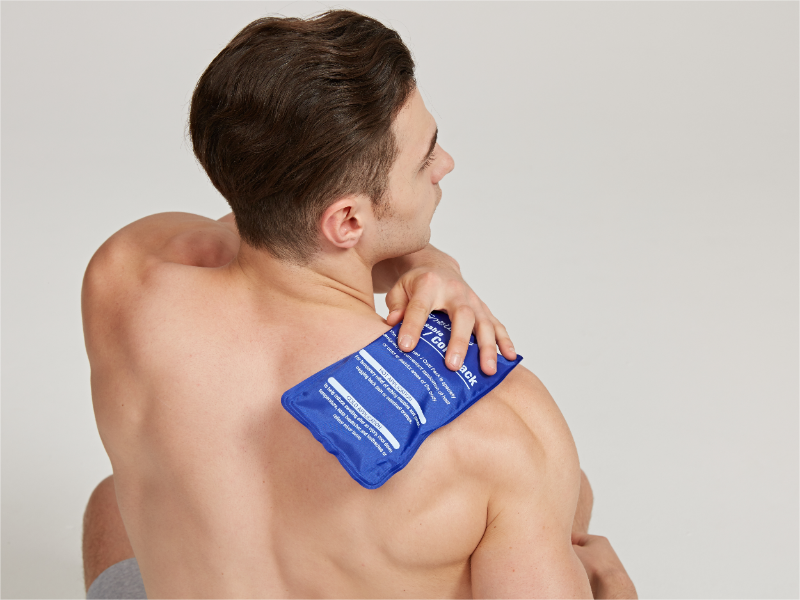
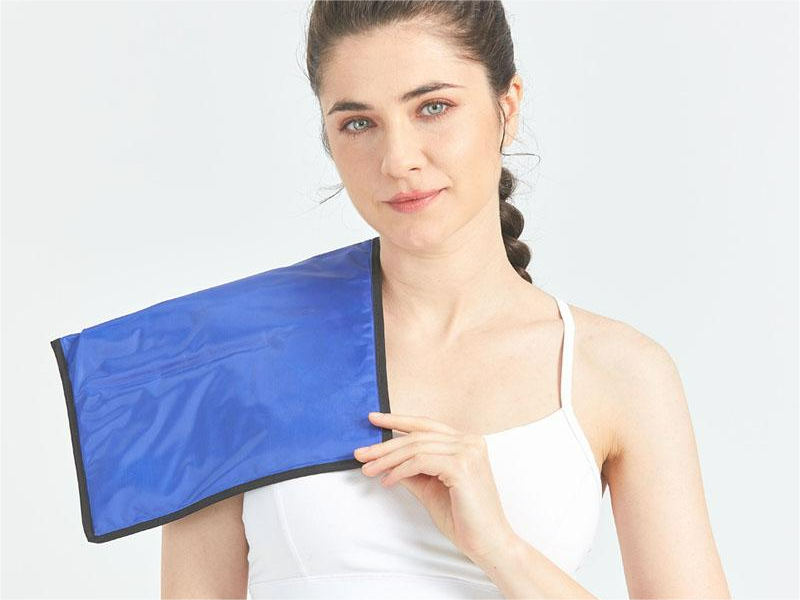
A migraine relief hat can actually be a pretty handy addition if you're building a thoughtful wellness collection in 2026. For wholesalers, choosing the right one isn’t just about picking a color or the price per unit. You’ve gotta think about how the fabric feels, how flexible the gel is, the fit range, and whether the supplier can keep up with steady quality and supply. Imagine a customer pulling the hat from a chilled pack and slipping it over their forehead—if it’s stiff, has scratchy seams, or smells funky from the packaging, that’s a quick turn-off. Little details really do make a difference.
This guide is here to walk you through what to look for in the product and sourcing questions—just remember, we're not treating this hat like a medical device. Some folks might find the cooling or gentle compression soothing, but results can really vary, and it’s important to note that this product doesn’t diagnose or cure migraines. When shopping around, it’s smart to check out the material specs, care instructions, size options, and even ask for samples. It’s also good to ask your suppliers how the gel behaves after being chilled repeatedly and if the seams hold up during regular wear. Those little checks can tell you a lot, but no sample can guarantee how every customer will feel about it—that’s just part of the deal. Clear descriptions, honest claims, and quick communication with suppliers go a long way in avoiding returns and building trust. While a low wholesale price might look tempting, it’s pretty pointless if the fit’s awkward or you can’t count on timely restocks. There’s no magic checklist—even the most careful buyers can miss something. The goal is a smart, balanced choice that prioritizes comfort, quality, and solid info.

Global Need: WHO Estimates Migraine Affects About 14% of People
WHO estimates that migraine affects about 14% of people worldwide. This figure points to a substantial need for practical comfort options, though it does not predict demand in every market. Migraine can involve intense head pain, nausea, and sensitivity to light or sound. Experiences differ. Some people need a dark room; others look for gentle cooling they can use while resting. A relief hat may offer comfort, but it does not treat the underlying condition or work the same way for everyone.
For wholesale buyers, product details matter. Check whether the gel stays flexible when chilled, whether the hat fits different head sizes, and whether its seams feel comfortable against the skin. Ask for clear care instructions and consistent specifications across samples and bulk orders. The category is not simple: one fit rarely suits everyone. Cooling preferences vary, too. A hat should be presented as a comfort accessory, not a guaranteed migraine solution. Clear, measured product information helps retailers set realistic expectations and gives customers useful details before they buy.
Global Migraine Prevalence: An Estimated 14%
WHO estimates that migraine affects about 14% of people worldwide—around 1 in 7 people—highlighting the global need for accessible relief options.
Source: World Health Organization (WHO). Figures are approximate global estimates.
Clinical Basics: ICHD-3 Defines Migraine Attacks as Lasting 4–72 Hours
For migraine without aura, the International Classification of Headache Disorders, third edition (ICHD-3), defines an untreated or unsuccessfully treated attack as lasting 4–72 hours. This is a diagnostic time range, not a promise that every person’s pain will follow a fixed schedule. Other criteria matter too, including pain features and symptoms such as nausea or sensitivity to light and sound. Timing alone is not enough.
For wholesale buyers, this distinction matters when evaluating migraine relief hats. A hat may offer a cooling or gentle-pressure sensation, but it cannot confirm a diagnosis or guarantee that an attack will end sooner. Check practical details: adjustable sizing, soft seams, and whether the material stays comfortable against the forehead. Small fit issues matter. A tight edge can feel unpleasant when someone is already sensitive to pressure.
Ask suppliers for clear material and care information, and avoid medical claims that go beyond available evidence. Some users prefer a chilled hat; others may dislike cold contact or pressure. There is no single fit for every headache experience. Product descriptions should leave room for that uncertainty, rather than suggesting one accessory works for all.
Relief-Hat Design: Compare Cooling Coverage, Fit, Materials, and Reuse
For wholesale buyers, a migraine relief hat should be judged by where its cooling reaches, not by appearance alone. Check whether the insert covers the forehead and temples, and whether it extends toward the back of the head. Gaps can leave pressure points uncovered. A useful sample test is simple: wear the hat for ten minutes and note any cold spots, slipping, or tight seams. Comfort varies, so avoid treating one fit as universal.
Fit needs to accommodate different head shapes without squeezing. Look for adjustable closures or flexible panels, then compare the stated size range with actual sample measurements. Soft, low-friction fabric can feel gentler against skin, while reinforced stitching may handle repeated use. But thicker fabric can also slow cooling. That trade-off is easy to overlook.
Ask suppliers to clarify which parts are reusable and how each part should be cleaned. A removable cover is practical; a gel insert may need different care. Check that instructions are clear and that samples behave consistently after repeated use. One sample is not enough. Cooling sensation and comfort are subjective, and a hat should not be presented as a substitute for medical advice. Specifications can look tidy on paper, yet small differences in seam placement or insert thickness may change the wearing experience.
Evidence Review: Distinguish Clinical Findings from Marketing Claims
2026 Best Migraine Relief Hat for Wholesale Buyers
Evidence Review: Distinguish Clinical Findings from Marketing Claims
WHO estimates that headache disorders affect about 40% of people worldwide, with migraine affecting roughly 14% (WHO, “Headache disorders” fact sheet). That scale creates demand, but it does not prove that a cooling hat treats migraine. A small 2013 randomized study of frozen neck cooling reported short-term pain relief for some participants. It tested a neck wrap, not every hat design. Treat that finding as limited evidence, not a product-wide guarantee. Still, the evidence is not tidy.
For wholesale review, separate measurable product features from health claims. Check cooling duration, contact area, adjustable fit, and whether the pack stays flexible when chilled. Ask suppliers for test methods and study details, including sample size and comparison group. Claims such as “clinically proven” need product-specific support; a general cold-therapy study is not enough. Fabric feel matters, too. A stiff seam pressing near the temples can undermine comfort, even if the cooling pack performs well.
Tips: Request temperature and wear-test data, then inspect samples after repeated freezing. Keep wording cautious: “designed to provide cooling comfort” is more supportable than promising migraine relief. Ask whether testers included people with migraine, and record adverse comfort feedback. Not glamorous, but useful.
2026 Best Migraine Relief Hat for Wholesale Buyers - Evidence Review: Distinguish Clinical Findings from Marketing Claims
Evidence snapshot: cooling products may provide temporary comfort for some people, but findings for one cooling method do not establish effectiveness for every migraine hat.
| Topic or claim |
What the evidence supports |
Evidence assessment |
Wholesale buyer check |
| Targeted cooling during a migraine attack |
A randomized study of targeted neck cooling reported reduced pain in participants with migraine. It investigated a particular neck-cooling method, not every cooling cap or hat. |
Limited, product-specific clinical evidence |
Ask whether any clinical study tested the exact product design and cooling method being offered. |
| “Migraine relief hat” category |
Evidence about cold application generally cannot establish that the entire product category provides reliable relief. Individual comfort and response can vary. |
Insufficient to generalize across products |
Treat category-wide efficacy statements as unverified unless supported by suitable evidence for the specific item. |
| “Fast” or guaranteed pain relief |
A clinical finding for a particular method does not establish a guaranteed onset, degree, or duration of relief for other products or users. |
Not established as a universal outcome |
Avoid guaranteed timing or outcome language unless substantiated by evidence matching the claim. |
| Migraine prevention or fewer attacks |
Temporary cooling or comfort during an attack is not evidence that a hat prevents migraine or reduces attack frequency. |
Not established for migraine hats |
Do not treat prevention claims as interchangeable with claims about temporary symptom comfort. |
| Compression, full-head coverage, or pressure-point claims |
These are design features. Without relevant clinical testing, their presence alone does not demonstrate migraine treatment effectiveness. |
Feature claims are not clinical proof |
Separate verifiable construction specifications from claims about health outcomes. |
| Cold-use safety |
Cold products can cause discomfort or skin injury if used improperly. Product directions should explain safe use, and users should stop if they experience concerning skin changes, pain, or numbness. |
Safety information is essential |
Review the instructions, warnings, intended-use wording, and any applicable market-specific requirements. |
| Clinical evidence to request from a supplier |
The most relevant evidence identifies the tested product, study design, participants, comparison group, measured outcomes, and adverse events. |
Useful standard for claim review |
Request the full study or report, not only a sales summary; check that the studied item matches the product being sourced. |
Reference: Sprouse-Blum AS, Gabriel AK, Brown JP, Yee MH. “Randomized controlled trial: targeted neck cooling in the treatment of the migraine patient.” Hawaii Journal of Medicine & Public Health. 2013;72(7):237–241. This study concerns targeted neck cooling; it does not establish the effectiveness of all migraine hats.
Wholesale Quality Checks: Assess Safety, Specifications, and Supplier Capacity
For wholesale buyers assessing a 2026 migraine relief hat, safety should be documented, not inferred from a cooling claim.
The WHO’s 2024 headache-disorders fact sheet estimates that 3.1 billion people experienced a headache disorder in 2021. That figure signals broad need, not proof that a hat treats migraine. Ask suppliers for material disclosures, skin-contact assessment records, and clear care and use instructions.
Inspect the sample in person. Check stitching around the gel pockets, odor, fabric edges, and whether the cold insert stays flexible after freezing. Request leak and seam test results after repeated freeze-thaw cycles, with the test conditions stated. Set measurable specifications for dimensions, weight, gel fill, and temperature performance. Include warnings against prolonged direct cold exposure. A polished sample is not enough.
Supplier capacity needs evidence too.
Review production lead times, monthly output, defect records, lot traceability, and backup plans for material shortages. Ask for recent inspection data and verify that production samples match the approved specification. A small pilot order helps, but it can miss problems that appear at scale. That gap is easy to overlook. ISO quality-management standards can inform supplier reviews, but a certificate alone does not prove each shipment meets your requirements.
2026 Buying Criteria: Compare MOQ, Pricing, Compliance, and Warranty
Wholesale buyers evaluating a migraine relief hat should compare more than the unit price. Ask suppliers for minimum order quantities by color and size, and whether mixed cartons count toward the minimum. A low MOQ can help with a small trial, but setup fees or freight may erase the savings. Request quotes at several quantities, including packaging, samples, and shipping. Details matter.
Compare prices against tangible specifications: fabric composition, seam finish, gel-pack weight, and stated cooling duration. Ask for current material and safety documentation, plus labeling details for each destination market. Requirements vary, and therapeutic claims may need extra review. Do not rely on a generic certificate; confirm its scope, test method, and product match. Small mismatch, big headache. It is easy to overlook.
Warranty terms deserve equal scrutiny. Check coverage for split seams, leaking gel packs, and faulty closures, along with claim deadlines and replacement freight. Clarify exclusions for normal wear, incorrect storage, or temperature misuse. Ask how defects are tracked across production lots. A polished sample can still hide uneven bulk stitching, so one sample is not enough. I would not promise migraine relief based on comfort alone. Verify the product’s intended-use wording and keep claims aligned with supporting evidence.
Conclusion
Migraine affects an estimated 14% of people worldwide, and ICHD-3 describes migraine attacks as typically lasting 4–72 hours. A Migraine Relief Hat may offer a convenient, reusable option for comfort, but its design should be assessed carefully. Compare the area and consistency of cooling coverage, adjustable fit, material feel, ease of cleaning, and how the product can be reused. Keep clinical evidence separate from promotional claims: comfort features do not establish that a hat prevents or treats migraine, and buyers should look for clear, appropriately qualified product information.
For wholesale purchasing in 2026, review product specifications, material and safety documentation, sample quality, and the supplier’s ability to meet expected order volumes. Compare minimum order quantities, pricing, lead times, compliance information, and warranty terms before committing. Clear answers and consistent quality-control procedures can help buyers evaluate whether a product is suitable for their customers and distribution needs.